
Ash wood: luminous and natural
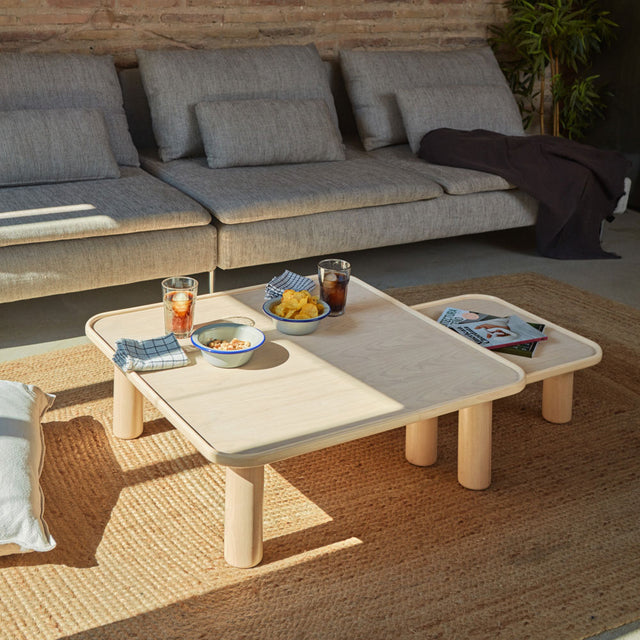
Ash wood brings clarity and freshness to any room. Its light tone and soft grain brighten any space, creating luminous and inviting atmospheres. It's the perfect choice for those seeking Nordic-style furniture that is functional, with clean lines and a light, airy feel.
An ash sideboard or chairs blend seamlessly into a modern living room, adding a touch of natural wood that brings serenity. Ash is a versatile, approachable wood, ideal for warm interior design projects that aim to convey calm and a sense of nature.
Ash wood complements minimalist decor, soft textiles, and neutral colors, but also family spaces where comfort is key. It's a wood that adapts, that feels light, and that allows the air to breathe. Choosing ash means opting for simplicity, essentiality, and honesty, with a finish that's always inviting to the touch.

Aesthetics
Ash wood has a delicate grain, with fine, uniform lines, creating luminous and balanced surfaces. An ash side table, ash dining chairs, or light-colored paneling bring visual spaciousness and serenity. Ash is the wood that illuminates a room without the need for artifice.
Compared to oak: while oak has more pronounced grain and a warmer, darker/golden tone, ash brings greater visual lightness, clarity, and brightness to a space. It depends on the desired style: ash for lighter, more modern, or brighter environments; oak for spaces with character, a heavier texture, or a stronger aesthetic.
Endurance
It's a semi-hard wood with great natural elasticity, making it ideal for curved pieces or organically designed furniture. While not as hard as oak, it holds up very well in interior furniture, chairs, or cabinet fronts. With the right finish, it maintains its fresh appearance for many years.
Density / hardness: European ash has a density of around 690 kg/m³ at 12% moisture, American ash slightly less (~640 kg/m³)
Elasticity/impact resistance: One of its great virtues. It is a strong wood, resistant to impact, with good flexibility, which allows uses that require withstanding tensile, bending, and impact stress without breaking.

Sustainability
Ash is a European resource available in responsibly managed forests. Its durability and suitability for treatments make it a respectful and efficient option. In sustainable interior design projects, ash offers the advantage of being lightweight, adaptable, and renewable.
Durability/Life Cycle: While not as naturally durable as oak, a well-cared-for ash furniture piece will last for many years. This helps keep your environmental footprint down: less need for replacement.
Treatments and associated products: For sustainability, it is advisable to use non-toxic treatments, ecological varnishes, FSC/PEFC certifications, etc. Also, responsible drying; avoid wood that has suffered damage.

What furniture or style does it apply to?
Ash wood fits perfectly in Nordic, minimalist, and slow-living spaces. It's ideal for lightweight furniture, modular shelving, contemporary chairs, or kitchen backsplashes seeking a clean, bright finish. It pairs beautifully with natural textiles like linen or cotton, enhancing its fresh and inviting feel.
- Scandinavian/Nordic: Ash, with its lightness, brings brightness, a sense of open space, and freshness. Excellent for light, minimalist furniture and spaces with plenty of natural light.
- Contemporary / modern: clean lines, soft contrasts; ash combines well with metal, glass, white, neutral colors.
- Soft rustic style or "light rustic": with natural grain, moderate knots, matte finishes.
- Light industrial: it can provide warm contrast alongside black metal or simple structures, as it does not visually weigh as much as a very dark oak.
Types of furniture and their most suitable uses :
- Indoor furniture: shelves, tables, chairs, dining room furniture that is not directly exposed to water.
- Parts that require flexibility or bending: for example by steam bending, turned details, tool handles, chair arms.
- Interior coverings: doors, friezes, moldings, decorative panels where a light, uniform tone and warm feeling are desired.
- Indoor floors in houses that are not too humid, as long as they are well treated and maintained.
- Furniture that is painted, lacquered, stained: ash accepts dyes and varnishes quite well, it adapts to the finish.
Where it is not ideal if not cared for : In exposed outdoor areas without protection, or in very humid environments / with constant water, because natural ash loses out to oak (which has higher durability), unless a protective treatment is used.
MATERIALES NATURALES
¿Fresno o roble? Dos maderas, dos personalidades.
El fresno destaca por su luminosidad, su veta natural y su flexibilidad. El roble aporta calidez, resistencia y una presencia más marcada. Conocer sus diferencias te ayudará a elegir la madera que mejor encaja con tu hogar.
| Característica | Fresno | Roble |
|---|---|---|
| Estética y veta | Veta visible y uniforme; sensación ligera y luminosa. | Veta más marcada; aspecto cálido y con carácter. |
| Color natural | Claro, del blanco cremoso al beige pálido. Admite tintes suaves. | Del beige miel al dorado y marrón. Puede desarrollar tonos más intensos con el tiempo. |
| Sensación visual | Luminosidad y amplitud visual. | Presencia y calidez envolvente. |
| Resistencia al impacto y flexión | Muy buena elasticidad; adecuado para piezas curvadas. | Alta resistencia y rigidez; generalmente menos flexible. |
| Durabilidad natural | Baja resistencia natural a la humedad prolongada; necesita protección. | Mayor durabilidad natural en el duramen de determinadas especies, aunque también requiere protección según el uso. |
| Estabilidad dimensional | Buen comportamiento con secado y acondicionamiento correctos; puede experimentar movimientos por humedad. | Buen comportamiento si está correctamente secado; también presenta movimientos naturales ante cambios ambientales. |
| Trabajabilidad | Se mecaniza y curva bien; acepta tintes y lacas. | Se trabaja bien; su poro marcado permite acabados con aceites y barnices. |
| Mantenimiento | Depende del acabado; proteger frente a humedad y desgaste. | Mantenimiento según el tratamiento aplicado; evitar humedad prolongada y productos abrasivos. |
| Sostenibilidad | Disponible con origen europeo. Priorizar trazabilidad y certificaciones FSC o PEFC cuando corresponda. | Disponible con origen europeo. Valorar gestión forestal responsable, durabilidad y trazabilidad. |
| Estilos decorativos | Nórdico, contemporáneo, minimalista y rústico ligero. | Nórdico cálido, rústico, clásico e industrial. |
| Usos recomendados | Sillas, frentes claros, paneles, piezas curvadas y mobiliario de interior. | Mesas, aparadores, suelos, escaleras y carpintería interior. |
| Dónde evitar | Exterior sin tratamiento y ambientes de humedad elevada. | Piezas que requieran una flexión importante; exposición exterior sin protección adecuada. |
| Precio orientativo | Habitualmente medio, según origen, calidad y formato. | Habitualmente medio-alto, según especie, origen y calidad. |
| En tres palabras | Luminosidad · Flexibilidad · Naturalidad | Calidez · Carácter · Durabilidad |
Consejo Slowdeco: si tu salón es pequeño o recibe poca luz natural, el fresno puede aportar una sensación más luminosa. Si buscas una madera con mayor presencia y textura visual, el roble es una excelente alternativa.